A properly fitting denture might not need adhesive, but changes in the bone structure can compromise its fit. The best denture adhesive enhances comfort, stability, and confidence on a daily basis.
Before you buy an adhesive, think about how well it sticks, how comfortable it is, and how easy it is to use. If too much adhesive is applied, the denture may not fit properly.
This guide explains what denture adhesives are and how they function. You will discover various types, including strips, creams, powders, and natural solutions. Dentatur step-by-step instructions will guide you on how to safely remove adhesive and clean your dentures.
What Are Denture Adhesives?
Different names for the same thing: denture glue, denture fixatives, and denture adherents. These adhesives are products designed to help keep dentures securely in place and enhance comfort in the mouth. They are made from a mix of adhesives, antibacterial compounds, and other natural ingredients that work well together.
Adhesives first appeared in the market in 1913. But it wasn’t until 1935 that the American Dental Association said adhesives were actually medicines. There are different types of adhesives, such as creams, powders, pads, and strips, and they are either soluble, insoluble, or natural.
Carboxymethyl cellulose and polyvinyl ether methyl cellulose are often found in soluble types. They expand naturally when saliva is present to make a secure fit. Insoluble types, like pads, stick to your teeth when they get wet.
View Real Smiles & Read Client Feedback
Types of Denture Adhesives Explained
Denture adhesives come in a number of different forms, such as creams, powders, strips, pads, and thermoplastic adhesives. Each adhesive type serves distinct purposes and has unique features.
If you know the differences between these adhesive choices, you can pick the one that will work best for you. The best adhesive for dentures for you may depend on things like how wet your mouth is and how well your dentures fit.
Denture adhesive creams

Denture creams are the most common type of adhesive used by people with dentures. It comes in tubes and is easy to put straight on the surface of the dentures.
These creams make a strong link between the denture and the gums when mixed with saliva. This helps you smile, eat, and talk better.
Pros
- The denture stays in place more effectively during chewing, enhancing comfort for patients.
- Cream adhesive allows for a better fit against the gums, minimising friction and discomfort.
- The adhesive performs optimally a few hours after being applied and maintains its position for an extended period.
Cons
- Cream adhesive can be challenging to remove completely from the denture.
- Excessive use of adhesive could also negatively affect your dental health.
- If you use too much or use the denture adhesive incorrectly, it may leave an unpleasant taste in your mouth.
How to apply denture creams
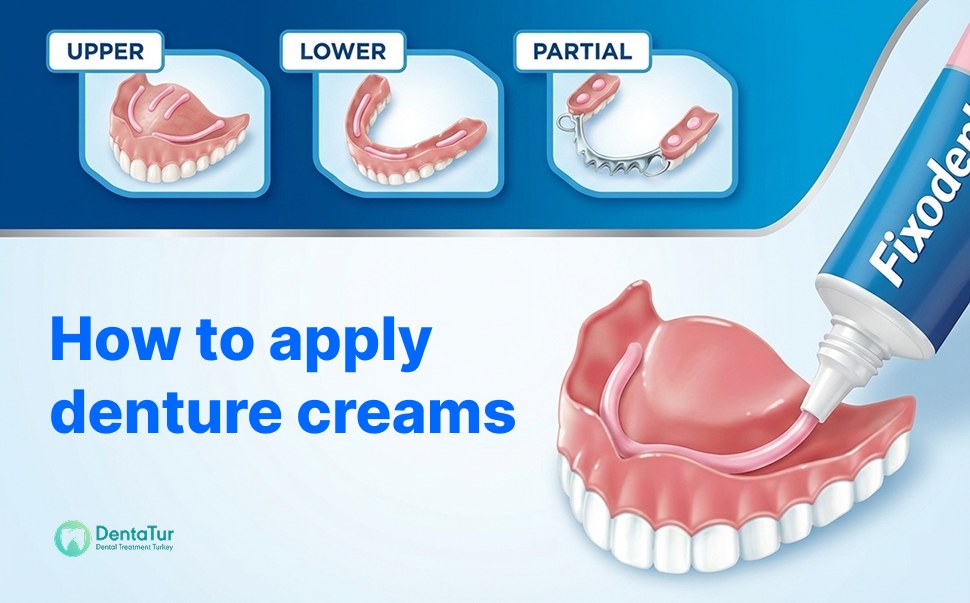
- Apply a small amount of cream adhesive to a clean, dry denture surface.
- One application per day is sufficient.
- Insert the denture into your mouth and bite gently. Wipe off any extra adhesive or cream, and wait 5 minutes before you eat or drink.
- At night, take out your denture and clean your mouth and the denture to get rid of any adhesive.
Denture adhesive powders

You put powder adhesives on the wet part of the mouth that will touch your gums. These powder adhesives can cover the entire denture, although the application method may vary by brand.
Although thinner, powder adhesives can sometimes provide even stronger adhesion than creams. Most powder adhesives have cellulose gum in them, which gets bigger when it comes into contact with saliva. Additionally, plant-based powder adhesives contain pectin derived from fruits.
Pros
- The mixture increases in size by 50% to 150% when saliva is applied, enhancing grip.
- Powder adhesives have no taste or smell.
Cons
- The effects may not last as long as creams. It might not work as well for people who chew a lot. For the optimal results, it should be reapplied during the day.
- Powder adhesive is less effective for individuals with dry mouths, as it relies on saliva.
- It may scatter during use, so ensure the surface is clean beforehand.
How to use denture powders
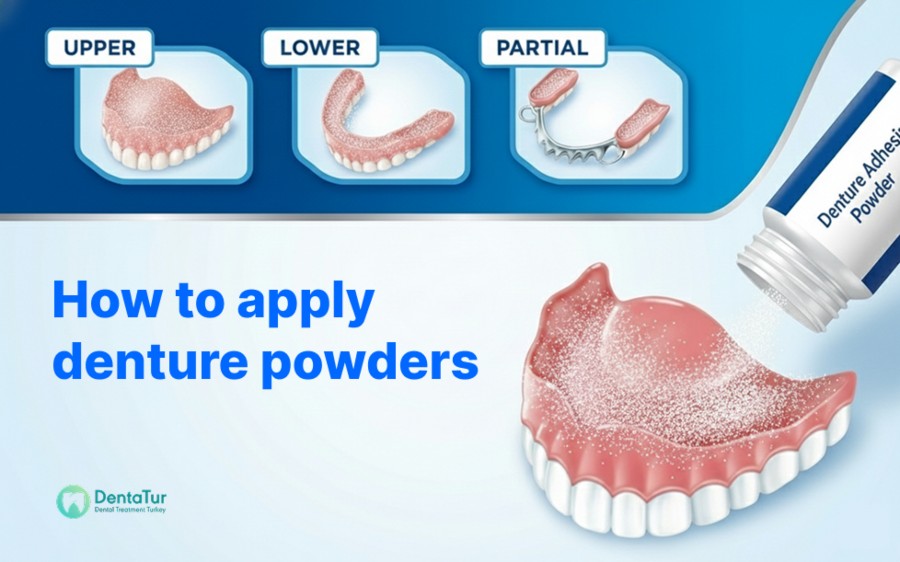
- Before applying the adhesive powder, make sure your dentures are clean and wet.
- Put a thin, equal layer on the ridges of the denture.
- Put your false teeth in your mouth and press down gently for a few seconds.
- Every night, take out your dentures and wash them well with warm water.
Denture adhesive pads
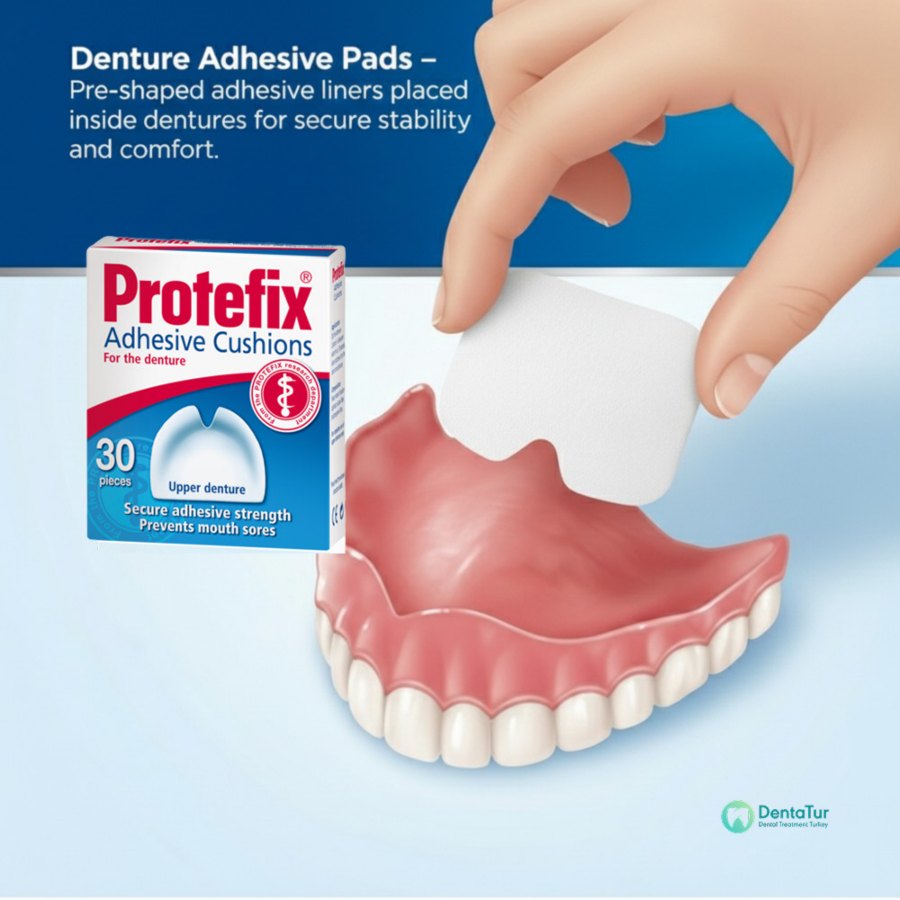
Pads consist of layers of adhesive specifically designed to fit between dentures and the gums. They are easy to use and beneficial, particularly ideal for new users or those with temporary dentures.
These adhesive pads, commonly referred to as denture cushions, help secure dentures while providing cushioning. Their water-resistant and insoluble design ensures durability, allowing them to fill gaps for a more comfortable fit.
Pros
- These adhesives are soft and cushiony, so they can be used on gums that are tender.
- There is no risk of overapplication.
- Their application is clean and neat, leaving no spreading or residue.
- They can be used in targeted areas in your mouth as needed and are water-resistant, ensuring long-lasting performance.
- Additionally, they are simpler to clean than powders or creams.
Cons
- Over time, these adhesive pads may change how your dentures fit.
- Some people say they can taste something light.
- These adhesives can put pressure on the gums, which may be painful for patients with sensitive gums.
How to use adhesive pads

- Ensure your teeth are completely clean and dry to get rid of any moisture or residue.
- Don't touch the sticky side when you open the pad box.
- Place the adhesive pads along the ridges of the dentures, avoiding contact with the edges or overlapping.
- Take both sides of the pads' cover paper off.
- Firmly press the adhesive pads onto the dentures.
Denture adhesive strips
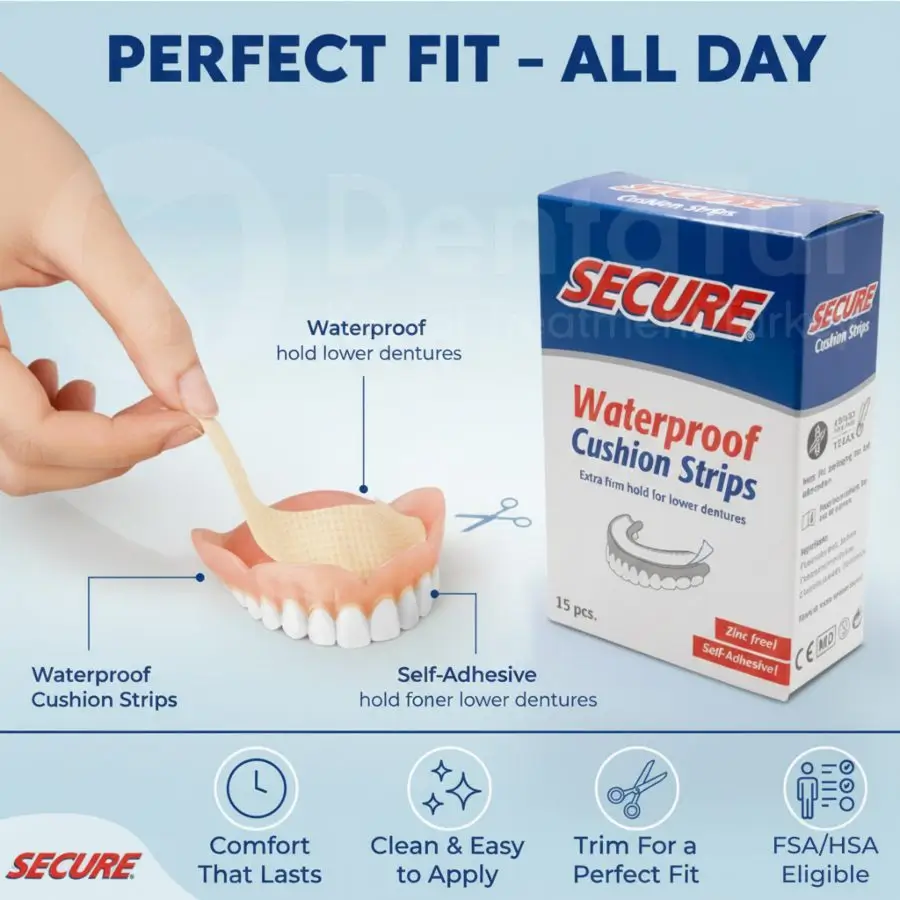
Adhesive strips are ideal for patients with excessive saliva since they do not dissolve in liquids. These non-toxic adhesive strips create a soft barrier under the denture, reducing discomfort, pressure sores, and swelling. Many people find the strips convenient and user-friendly.
Pros
- The design allows for targeted application, providing enhanced stability.
- These adhesives are simple to clean and easy to switch out.
- The insoluble matrix contributes to a longer-lasting grip.
Cons
- The way your bite fits together may change slightly.
- This could lead to long-term stress on the alveolar ridge.
- In some cases, the adhesion might not be strong enough.
How to use denture strips

- Make sure that your dentures are clean.
- Ensure the surface is absolutely clean and dry before opening the strips without touching the sticky side.
- Put adhesive strips along the denture ridges, making sure they don't touch the edges or overlap.
- To make the adhesive work, lightly wet the strips with water.
- Use your fingertips to smooth down any bubbles or wrinkles.
- Put in the dentures and press down hard for a few seconds to set.
Thermoplastic denture adhesives

Thermoplastic adhesives enhance the fit of dentures by utilising materials that change shape with heat. When heated, these adhesives soften and conform to the gums as they cool, providing a comfortable fit. They maintain a good fit for an extended period and are very stable for daily use.
Pros
- It doesn't dissolve; therefore, it won't slip even when it becomes wet.
- Fills up the spaces under dentures to make them less irritating.
- Lasts longer than regular adhesives, which need to be reapplied every day.
- More biocompatible than chemical-based alternatives.
Cons
- Hot water is needed to soften and bend it, which makes it harder to use.
- When you reuse it, heat it again.
- If the moulding is done wrong, it could cause pain or pressure.
- Not all types of dentures work with this.
How to apply thermoplastic adhesives

- Put the thermoplastic material in hot water until it gets soft.
- Brush and floss all of your teeth.
- Spread the softened adhesive evenly on the denture surface.
- Insert the denture and press gently, allowing it to mould to your gums as it cools.
- Hold the denture in place for a few seconds so the adhesive can harden.
- If you need to reuse, reheat and reshape the adhesive, follow the same steps.
What Factors Should You Consider When Choosing a Denture Adhesive?
When choosing an adhesive, you should consider your unique needs, your own comfort, and how safe the ingredients are. Formulas that don’t need saliva to work should be chosen by people with dry mouths. People who are sensitive should carefully read labels to find possible irritants.
Also, people who don’t make enough saliva naturally should see a dentist to ensure their dentures fit well.
The proper adhesive for you depends on factors such as comfort, strength, and your specific needs. Before you make a decision, evaluate the most crucial factors.
Holding power
The adhesive should effectively secure the dentures in place, whether they are wet, dry, or filled with food. Creams and powder adhesives are particularly effective, especially on the molars.
Features of denture adhesives
Denture adhesives come in several different forms, such as paste, powder, strips, and pads. Adhesives work well on a wet denture base and cover the whole area. They make it easier to bite down, especially on the front teeth, which is great for people whose mouths are dry.
Dentures stick better to powder adhesives when they are wet, but they need saliva to work. If your mouth is dry, you might not be able to use them well. It’s safe to use strips and pads to fix dry dentures, but over time, they could change your bite or ridges.
Some feature antimicrobial ingredients such as hexachlorophene or sodium tetraborate. Alternatives to latex, acrylic, and zinc are safer for delicate skin. Although peppermint and wintergreen oils make adhesives smell lovely, they can be harmful to allergy sufferers.
Taste and texture
Some adhesives may have a bad smell that lasts for a long time. Eating foods that are bland or have a moderate flavour can help. Cream adhesives are smooth and easy to use, but they might change the way food tastes. Powder adhesives can feel and flow in different ways depending on how much saliva they touch.
Ingredients and allergies
If you have gums or allergies, read the list of ingredients carefully. If zinc or artificial scents of adhesives bother you, avoid those things. Instead, choose hypoallergenic formulas.
Top Denture Adhesives for Every Need
Your dental demands may determine your denture adhesive. It depends on how much bone you’ve lost, the type of dentures you have, or how sensitive you are to zinc.
Best denture adhesive for bone loss
Things stay stable when there is a lot of bone loss with strong adhesives like Super Poligrip Free and Fixodent Complete. Cushion-grip liners and adhesives change shape to fit your gums, providing extra support for people whose gums are pulling away from their teeth.

Best zinc-free denture adhesive
Adhesives that are free of zinc lower the chance of getting too much zinc and the health problems that come with it. You can choose from these:
- Super Poligrip Original Zinc-Free
- Cushion Grip Thermoplastic
- BioForce Extra Strength
- Fixodent Ultra Max Hold

Most reliable denture adhesive for upper dentures
Upper dentures work better when they have a bigger surface area for suction, although gaps might make the seal weaker. Ezo Denture Cushions is the best denture adhesive for upper dentures, filling in gaps and improving the fit.

Best adhesive for lower dentures that stays secure
It’s harder to keep lower teeth in place because they cover less ground, and the tongue moves around. Fixodent Complete Original Denture Cream is the best denture adhesive for lower dentures on the market. It comes with a narrow tip for accurate application.
What Is the Best Denture Adhesive on the Market?
There are many great solutions for different demands and tastes.
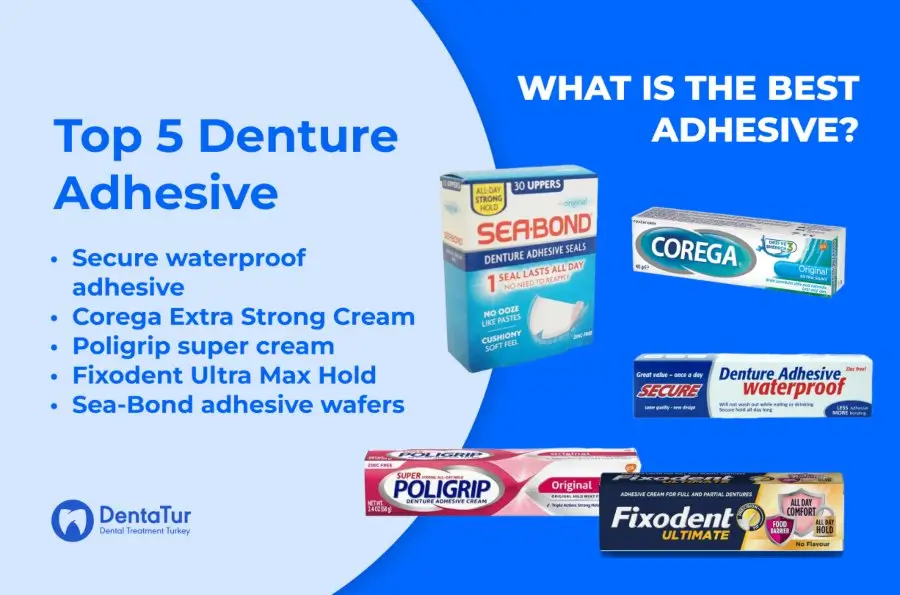
Secure waterproof adhesive
It is particularly effective for patients with excessive saliva production or those who lead an active lifestyle.
Corega Extra Strong Cream
Corega provides comfort and a strong grip without zinc. People who want long-lasting strength and safety love it.
Poligrip super cream
Poligrip ensures a tight seal and a smooth texture for comfort. It’s an excellent adhesive that doesn’t contain zinc.

Fixodent Ultra Max Hold
Fixodent is recognised for its superior adhesion and long-lasting freshness. This adhesive is effective for both upper and lower dentures.
Sea-Bond adhesive wafers
Sea-Bond wafers are clean pads that provide cushioning and securely hold dentures in place.
How to Remove Denture Adhesive Properly
When you take off your dentures the right way, you keep your mouth and teeth healthy. If you follow the right steps, your gums will stay healthy, your dentures will stay clean, and they will fit well every day.

Step 1: Rinse your mouth with warm water
Warm water helps remove the adhesive gently, ensuring that you won’t get hurt.
Step 2: Gently loosen your dentures
To loosen your dentures, rock them back and forth slowly. Do not pull them out.
Step 3: Remove the dentures carefully
Remove the dentures without tugging too hard. Avoid using sharp objects or instruments.
Step 4: Rinse away remaining adhesive
Rinse your dentures with warm water and use a soft brush to remove any adhesive that is still on them.
Step 5: Clean your dentures thoroughly
We advise our patients to use a denture cleaner to remove food and germs.
Step 6: Rinse and store properly
Clean the dentures thoroughly and store them in a container filled with clean water overnight.
Natural Alternatives to Denture Adhesives
There are some natural ways to keep dentures in place, but they don’t work as well as adhesives you can buy at the store.
Coconut oil
Coconut oil softens the gums and adds a slight natural stickiness for improved adherence.
Aloe vera gel
It calms gums and provides a small amount of suction to help keep dentures in place.
Cornstarch
Mix cornstarch with water to make a mild, natural adhesive that will keep things together for a short time.
Our Popular Treatments





How to Keep Dentures Stable Without Adhesive
You don’t always require adhesive to hold your teeth. See what you should do to use your dentures in comfort all day.
Make sure your dentures fit properly
Schedule regular dental check-ups to ensure that your teeth are securely in place. Dentures that don’t fit right can be painful and make it hard to speak.
Use correct chewing techniques
To maintain your balance and prevent slipping, chew evenly on both sides.
Stay hydrated to support saliva flow
Adequate saliva helps keep dentures stable and prevents them from drying out.
Strengthen your oral muscles
Engage in gentle mouth exercises to enhance your control and comfort.
Maintain proper denture hygiene
To prevent bacteria and odours from accumulating, clean your dentures daily. Maintaining good hygiene contributes to your overall well-being and longevity.
FAQ: Best Adhesive for Dentures
How long does denture adhesive hold during the day?
How long denture adhesives last depends on the type and components. A lot of them will last at least 12 hours. They may not last as long during the day, depending on how well the denture fits, what you eat, and how much you talk.
Is it safe to use denture adhesive daily?
Yes, you can use it daily if you use the right amount and choose natural adhesives without zinc or other harmful ingredients. Always follow product instructions to avoid irritation or health issues.
How does denture adhesive work with full dentures?
It helps the gums and dentures adhere to each other, ensuring they remain secure in place all day long. It won’t slip and will be more comfortable all day. You can talk and chew better, too.
What is the best adhesive for partial dentures?
Fixodent Extra Hold is soft and safe for patients wearing partial dentures. There is no harm to the denture material, and it sticks well without being rough.
Which types of dentures benefit most from adhesives?
It’s easy to stick full upper dentures in place because they cover more of the palate. Stickers help make a stronger seal, which makes it easier to eat and talk while being stable, comfortable, and sure of yourself.
Can I reattach a tooth to my dentures with glue?
No, you should never use regular glue on your dentures because it is unsafe and could damage the material. If you have a loose tooth, you should always see a dentist to get it fixed so that it works and stays clean.
Can I use adhesive on dentures with a soft liner?
To prevent damage, only use adhesives that are safe for use with soft liners. Some could hurt the soft lining, so pick ones that are safe for your gums and dentures to keep them both happy and healthy.
What should I do if dentures are still loose even with adhesive?
Talk to your dentist if the adhesive doesn’t fix loose dentures. You may need to adjust, reline, or replace them. This prevents sores and improves mouth function.
Can I eat all kinds of food while using denture adhesive?
Adhesives help keep your dentures in place, but foods that are very sticky or firm can break or move them, so avoid those.
How much denture adhesive should I use?
On the denture‘s surface, put small dots or thin strips of glue. Overuse can cause mess, spillage, and pain. If not, add extra.
How often should dentures be replaced?
You should get new teeth every five to ten years. Things may fit and feel better in the long run if the lips and jawbone change. To make sure that your dentures work, are safe, and are comfortable, you should get them checked out.

Founder of Dentatur Dental Clinic in Turkey, with 25+ years of experience in implantology and aesthetic dentistry. She treats international patients seeking natural, long-lasting smile makeovers using advanced technology.